
I’ve had eczema and asthma since the day I was born. I researched this page to explain my own seasons, cycles, allergies, and the effects of diet and exercise. The results made me cut two of my own assumptions.
Inflammatory illness does behave like a bucket. Load it to the brim with inflammation-causing things and you have the worst case scenario. Drain that bucket vigorously and your disease severity goes way down.
Almost everything sold as drainage by marketers and influencers is not.
Sweating does not flush inflammation out of you. More water than you need drains nothing.
The drain that matters is an active biological program, and in chronic inflammatory disease it appears to be measurably weaker than it should be, which is adding insult to injury, which sucks.
The levers that actually move the level are unglamorous:
Nobody sells a $50 supplement or a $200 device for any of them. Not directly, anyway.
Every summer my skin gets worse, and every winter it clears up on its own. Same person, same house, same diet. For years I explained that to myself with a bucket: things pour in, things drain out, and when the level gets past a line, I flare.
Eczema is just where I happen to meet it. The same shape turns up in gout, migraine, rheumatoid arthritis, psoriasis and inflammatory bowel disease, and clinicians in all of those fields reach for some version of it. So I went looking for what actually holds the model up, and what I had wrong.
Established
Nobody measures your bucket. There is no blood test that returns a level, and if someone offers you one, keep your card in your pocket.
What is documented is the threshold behaviour underneath it. Three diseases show it, and one of them can put a number on it.
The formal cousin is allostatic load, coined by McEwen and Stellar in the 1990s to describe the cumulative wear of repeated stress responses across multiple body systems. The MacArthur studies of successful aging found something bucket-shaped in the data: the risk relationship looked like a threshold, where only the people at the highest allostatic load showed significantly greater decline in cognitive and physical function.
So the model earns its keep. What it does not earn is precision. The bucket has no volume you can quote, and anyone telling you theirs is 70% full is describing a feeling.
Established, and the part that changed my mind
I had been picturing the bottom of the bucket as an opening. Stuff stops coming in, level goes down, physics does the rest.
That is wrong, and it is the single most useful correction on this page.
Work led by Charles Serhan established that resolution of inflammation is an actively driven biochemical program, not a passive winding-down. The body manufactures a family of molecules for the job, the specialized pro-resolving mediators: resolvins, protectins, maresins and lipoxins. They clear out the debris, clean up dead cells, and switch the response off.
Those four names are worth ten minutes of your life, because they are the machinery this whole page is about, and they are all built out of fat you ate.
Those are my drawings above, simplified so you can count things. Here is how the real structures are published, which is worth one look, because the answer to the question is sitting right there in the picture.
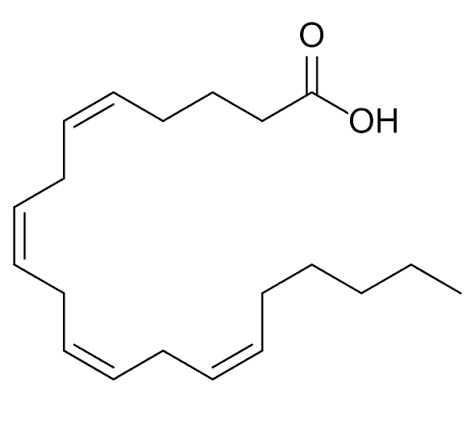
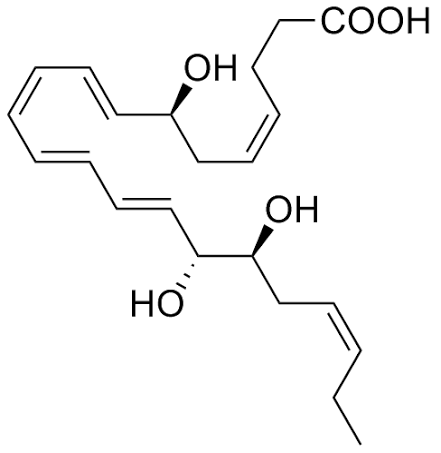
I went in expecting something obscure and unbuyable. Some hormone-like thing that only a blameless lifestyle produces in decent quantity. That is not what they are. Look at the drawings again: the raw material is a bottle of omega-3. The cheap one.
I am vegan, so mine is algae oil rather than fish oil, and that is not a compromise. Algae is where the EPA and DHA come from in the first place — fish accumulate it by eating algae, and the supplement industry now just goes to the source. Same two molecules, same drawings above.
Which raises the obvious question, and the answer is more interesting than yes or no.
The substrate, and it does something measurable. In a double-blind placebo-controlled crossover trial, an enriched marine oil supplement produced a time and dose-dependent increase in plasma pro-resolving mediator concentrations. Separately, omega-3 supplementation raised these mediators in healthy adults given a low-dose endotoxin challenge. So the pipeline is real and you can feed it.
The assembly. Two enzymes, 5-lipoxygenase and 15-lipoxygenase, add those red oxygens. When researchers blocked either enzyme, the macrophage effects of every omega-3 supplement tested disappeared. The parts do nothing on their own.
And the assembly is not uniform. Four different commercial supplements handed human macrophages four different mediator signatures. Not more or less of the same thing, different things.
So the honest shape of it: the raw material is a commodity, and the conversion is a body process.
Which lands back on the same unglamorous list. Visceral fat, sleep, movement and total food are on the enzyme side of the equation, not the capsule side. That is not a reason to skip the omega-3. It is a reason not to expect the capsule to do the part of the job the capsule cannot reach.
Lipoxins come from an omega-6, so the thought arrives on its own: buy some arachidonic acid, make more stop signal. I had it too. It is the one supplement on this page where the evidence points hardest the other way.
That last point makes the question more reasonable for a vegan than for most people, and it still does not get me to a bottle. Nobody has shown you can push the pathway toward the resolving branch by eating more of the starting material, and the branch it reliably feeds is the other one. Being lower in something is only an argument for topping it up if the top-up goes where you want it.
If someone with an inflammatory condition is weighing it anyway, the question worth putting to a doctor is which branch their own labs suggest is already busy, because that is the part no supplement label can tell you.
Inflammation does not drain. It gets switched off, by real physiological machinery, on purpose.
That machinery also clears away dead cells and debris, calls off the immune cells still arriving, and helps kill microbes while it works, which is why it is not the same thing as suppressing your immune system.
Failure to resolve early inflammation is what turns it chronic. The drain has to be running, not just open.
Then the line that stopped me. Pro-resolving mediators are generated in asthma, but their production is reduced in severe and uncontrolled asthma, which researchers describe as a resolution defect.
That is not unique to asthma. Failed resolution is now one of the standard explanations for why inflammation becomes chronic at all, across the inflammatory diseases. So when someone with a chronic inflammatory condition says their drain is narrower, that is a measured finding in the literature and not a figure of speech.
The honest caveat, and it matters: this is measured in airway samples in research settings, the field is young, and nobody hands you a pro-resolving mediator number at a GP appointment. I am not going to pretend the science is further along than it is. But it reframes the whole model. A narrow drain is a bigger problem than a wide tap, because you can close a tap.
Not supported
Sweat is roughly 99% water, with salt, urea and traces of other things. Its job is cooling you down. Trace amounts of metals and metabolites do leave in it, in quantities your kidneys process in seconds. A dermatology professor put it flatly: in the big picture, sweat has one function, and sweating heavily is not going to release a lot of toxins.
So sweat is not carrying inflammation out of you. That part of the wellness pitch is wrong, and it is the part the saunas and the wraps are sold on.
Except I nearly stopped there, and stopping there would have been the mistake. Because my skin is reliably better after a hard aerobic session where I keep wiping myself down with a damp towel. Every time. That is not nothing, and it turns out there is a real explanation for it that has nothing to do with drainage.
Sweat is not waste water. It carries antimicrobial peptides, chiefly dermcidin, which kill bacteria on the skin surface. It carries lactate and urea, which are part of the skin's own moisturising system. It maintains surface pH and feeds the skin microbiome.
And in atopic dermatitis, several dermcidin-derived peptides are significantly reduced in sweat, which researchers link to the impaired bacterial defence those patients have. Sweat function itself is measurably disordered in the condition.
Now the other half, which is why sweat has a bad reputation in eczema circles. Around 80% of people with atopic dermatitis show type I hypersensitivity to sweat — but the allergen is not sweat. It is MGL_1304, a protein secreted by the yeast Malassezia globosa that ends up in sweat, and it is the major histamine-releasing antigen in it.
Read those two findings side by side and the whole apparent contradiction resolves. Producing the sweat is useful. Leaving it sitting on your skin is what costs you. The peptides do their work at the surface; the yeast antigen needs contact time to set off histamine release.
Which means the towel is doing the work, not the sweat.
The published management pattern is emollient before, cool air during, and a prompt lukewarm rinse afterwards with moisturiser back on within two or three minutes. Wiping down as you go is the same idea run continuously: you get the antimicrobial peptides, the hydration and whatever exercise itself is doing to visceral fat and cytokines, and you clear the antigen before it has time to work.
So the honest correction to my own headline: sweat drains no inflammation, and sweating is still worth doing. Those were never the same claim, and I had collapsed them into one.
Lymph genuinely moves with muscle contraction and breathing, and manual lymphatic drainage is a real treatment with a real target. That target is fluid. In lymphedema, particularly the milder cases after breast cancer surgery, it produces measurable volume reduction.
Outside that, the evidence thins fast. A systematic review of its use in musculoskeletal injury found benefit for swelling and pain, but only half the studies held up under quality assessment. In fibromyalgia the evidence is limited. After total knee replacement, a meta-analysis of randomised trials concluded it is not recommended.
So it moves fluid, which is a genuine thing to want moved when you are swollen. It is not draining inflammation out of your system, and the reviews that looked hardest for a broader effect did not find a convincing one.
This one has a real half. Dehydration raises inflammatory markers, and the effect shows up clearly under heat and exertion: acute exercise in the heat increased IL-6 and cortisol only when fluid intake was restricted, and full fluid intake reduced the size of the response.
The other half is where it falls apart. In a Framingham cohort analysis of community-dwelling older adults, there was no evidence that water intake or hydration markers were related to CRP.
Adequate hydration is a floor to stay above, not a lever to push. Being dry costs you. Being extra wet buys you nothing.
The lesson = when a mechanism is popular, flattering, and requires nothing measurable, check who is selling it.
Sweat-as-detox sells saunas, wraps, infrared beds, massage packages and expensive water. There is no product attached to going to bed an hour earlier, so nobody runs ads for it. That asymmetry is most of why the wellness aisle and the research literature disagree about drainage.
Established
Exercise reduces chronic inflammation. That was never in doubt. I just had the mechanism wrong, because I had it filed under sweat.
Contracting muscle releases IL-6 as a myokine, a signalling molecule made by muscle itself. That release is followed by increases in IL-10 and IL-1 receptor antagonist, which directly suppress TNF-alpha and limit IL-1 beta signalling. Pedersen's lab identified muscle-derived IL-6 in 2000 and it reset the whole field.
The second route is slower and probably bigger. Exercise strips visceral fat, and visceral fat is not padding, it is an active endocrine organ producing IL-6 and TNF-alpha on its own account.
One detail worth carrying: in a meta-analysis of randomised trials, exercise showed a dose-response effect on visceral fat of about −0.15 per 1000 calorie deficit per week, while the effect of caloric restriction was not dose-dependent. More exercise kept producing more visceral fat loss. More restriction did not, in the same way.
Mechanism established, human benefit unclear
The mechanism is real and it is elegant. Fasting raises beta-hydroxybutyrate, a ketone body that inhibits the NLRP3 inflammasome, which is a central switch in the inflammatory response.
The human trial evidence is messier. An earlier meta-analysis of randomised trials found intermittent fasting significantly reduced CRP. A 2025 meta-analysis found no association with CRP at all, though TNF-alpha did fall.
And the finding that reframes it: caloric restriction may be more effective than intermittent fasting for chronic low-grade inflammation, which suggests the weight loss is doing much of the work the clock is taking credit for.
That is not an argument against fasting. Plenty of people find a time window the easiest way to eat less, and eating less is the thing that works. It is an argument against believing the window itself is the medicine.
Established, with real nuance
Sleep. I did not have it on my list at all, which in hindsight is absurd, because it is probably the biggest inflow I was ignoring.
Irwin's systematic review and meta-analysis covered 72 studies and more than 50,000 people. Sleep disturbance was associated with higher CRP and higher IL-6.
The nuance is the interesting part, and it is not what most articles say:
From the label
I take abrocitinib, sold as Cibinqo, an oral JAK1 inhibitor, for eczema. It has been the single most effective thing I have ever taken for it. I had been describing it privately as prednisone lite: not as bad as steroids, but surely carrying some ongoing systemic cost.
That description is wrong in an interesting way.
Prednisone's damage is glucocorticoid damage. Suppression of your own adrenal axis, bone loss, raised blood sugar, weight gain, muscle wasting. A JAK inhibitor does none of that. It works by blocking a signalling hub that sits downstream of a set of inflammatory cytokines, which is a completely different intervention.
What the label does show is a lipid change. In the placebo-controlled studies, at week 4 on the 200mg dose, median LDL cholesterol rose 9.1% and median HDL rose 20.0%. On 100mg it was 4.9% and 12.1%. Those increases persisted through the treatment period.
Read that pair again. HDL went up more than LDL did.
Here is where it gets genuinely strange. Across the JAK inhibitor class, the largest increases in LDL and HDL have been observed in the patients with the greatest reduction in CRP. Inflammation suppresses circulating lipids. Take the inflammation away and the lipids come back up toward where they would have been all along. A laboratory study of tofacitinib, another drug in the class, found it increased macrophage cholesterol efflux and reduced cholesterol uptake and synthesis.
Which means some part of that rising LDL number is the bucket draining, arriving on a lab report dressed as a problem.
None of that makes the drug free. This class carries a boxed warning for serious bacterial, fungal, viral and opportunistic infections, for major adverse cardiovascular events, for malignancy and for thrombosis. That is a heavier warning than prednisone carries, not a lighter one. It is why the bloodwork happens.
So it is not a lesser version of a steroid. It is a different instrument with a different bill, and the bill is not mainly the cholesterol line. If your own numbers moved after starting one of these, the useful thing to bring to the prescriber is the question: how much of this rise is inflammation lifting, and does it change what we do next? That is their call to make with your full chart in front of them, and it is a reasonable question to put in front of them.
Same bucket, three ways to run it. The only variables are how hard the taps are open and how well the drain is working.
People want a ranked list, so here is one, with a warning attached to it.
These interventions have been measured in different populations with different markers over different durations. There is no common unit, so this is an ordering, not a measurement. Anyone who gives you percentages across a list like this has invented them.
The bucket survived the fact-check. The plumbing did not.
I came in thinking of the bottom of the bucket as an opening, and of drainage as something I could do to myself with heat and water. The drain is a manufacturing process, it can be defective, and in chronic inflammatory disease there is evidence that it is.
The sweat question was the one I got most wrong, and not in the direction I expected. Sweat carries no meaningful inflammation out of you, and sweating is still worth doing, for reasons that live entirely at the skin surface and have nothing to do with drainage. I had turned one true claim into a bigger false one.
Which flips the priorities. If the drain is the constraint, then the biggest wins are the ones that either widen it or stop loading it: the medication that treats the actual disease, the visceral fat that is manufacturing its own inflammation, the sleep that raises CRP when it stays broken for weeks, and the total amount of food. Those four are dull, unsellable, and appear to be most of the effect.
What the cut items had in common is that each felt like effort and produced a visible result within the hour. That is a good description of a placebo and a bad description of a mechanism. It is also why the correction on sweat matters, because the reason to sweat turned out to be real and completely unrelated to the reason people are sold it.
What I still do not know, and I would rather say so than round it off: nobody can tell me how narrow my own drain is. The pro-resolving mediator work is a research tool right now, not a test I can ask for. So I am working from a model that fits my seasons and matches the literature, which is not the same as knowing.
If you want one thing to take to your own doctor from this page, make it the question rather than the plan. For me the useful one was whether the lipid change on my medication was the drug or the disease lifting, because those two have completely different implications and only one of them is a problem. Bring your numbers, ask which it is, and let them look at the whole chart.
Sleep turned out to be the biggest thing I had left off this list, so it earned its own page.
Sleep After 50: What The Evidence Actually FixesNo, and yet sweating is still worth doing. Sweat is roughly 99% water plus salt, urea and traces of other substances, and the liver and kidneys do the filtering, so nothing meaningful is being flushed out. But sweat carries antimicrobial peptides such as dermcidin, which are reduced in atopic dermatitis, plus lactate and urea that are part of the skin’s own moisturising system. The catch is contact time: around 80% of people with atopic dermatitis react to sweat, and the allergen is MGL_1304, a Malassezia globosa protein carried in it. Producing sweat helps, leaving it on the skin does not, which is why prompt rinsing or wiping is the published advice.
Nothing on this page says that. Dehydration raises inflammatory markers, especially under heat and exertion, so staying adequately hydrated matters. The point is that going beyond adequate has not been shown to lower CRP, so it belongs in the category of things to not get wrong rather than things to push harder on.
Inflammation suppresses circulating lipids, so when a drug reduces the inflammation, the lipids rise toward where they would otherwise have been. Across the JAK inhibitor class the largest lipid increases have been seen in patients with the largest CRP reductions. Whether that changes anything about your treatment is a question for the prescriber who ordered the test.
It is a lay model, not a measured quantity, and there is no test that reports a level. The threshold behaviour underneath it is documented, in atopic dermatitis trigger-load descriptions and in the allostatic load literature, where risk of decline showed a threshold-shaped pattern rather than a smooth one.